Lab Equipment Essentials: Selection, Maintenance, and Safety Guidelines

You rely on lab equipment to turn careful plans into reliable results, whether you work in research, teaching, or quality control. Understand which tools suit your tasks, how to use them correctly, and how to maintain them to avoid costly mistakes and downtime. This article will guide you through common types of equipment, practical usage tips, and straightforward maintenance steps so you can choose and care for gear that supports consistent, accurate work.
Expect clear comparisons of instruments, quick checks for safe operation, and simple maintenance routines that extend equipment life and protect your results. Apply these practical points to streamline your workflow and reduce the surprises that slow experiments and analyses.
Types of Lab Equipment
You will encounter tools for handling liquids and solids, devices that measure and record quantities precisely, heat sources for reactions and sterilization, and protective items that reduce risk and control exposure.
Glassware
Glassware includes beakers, flasks, graduated cylinders, pipettes, and watch glasses.
Beakers and Erlenmeyer flasks serve mixing and rough volume containment; choose borosilicate glass when you need thermal or chemical resistance.
Graduated cylinders and volumetric flasks provide more accurate volume measurement—use volumetric flasks for single, precise dilutions and graduated cylinders for approximate volumes.
Pipettes come in two main types: volumetric (high accuracy for fixed volumes) and micropipettes (adjustable, for microliter ranges).
Inspect for chips, cracks, and calibration marks; damaged glassware alters volumes and increases breakage risk.
Label glassware with solvent-resistant markers and clean immediately after use to avoid cross-contamination.
Measurement Devices
Measurement devices span balances, pH meters, spectrophotometers, and thermometers.
Analytical balances measure to 0.1 mg or better; use calibration weights and place balances on vibration-free surfaces.
pH meters require regular calibration with standard buffers and proper electrode storage to maintain accuracy.
Spectrophotometers quantify absorbance or transmittance; select wavelength range and cuvette type to match your assay.
Temperature control and monitoring rely on digital thermometers and thermocouples—verify probe placement in the sample for representative readings.
Document calibration dates and maintenance for each instrument to meet reproducibility and audit requirements.
Heating Equipment
Heating equipment covers hot plates, Bunsen burners, heating mantles, and ovens.
Hot plates with magnetic stirrers provide controlled heating and mixing—confirm surface temperature limits and use a separate stir bar for each experiment to avoid contamination.
Bunsen burners deliver high, direct flame for glassworking and quick heating; use only with appropriate ventilation and flame-resistant supports.
Heating mantles replace open flames for round-bottom flasks and distribute heat evenly.
Ovens and incubators offer stable, uniform temperatures for drying, sterilizing, or culturing; monitor with independent thermometers.
Always use heat-resistant gloves, shields, and proper clamping when securing glassware to prevent spills or thermal breakage.
Safety Equipment
Safety equipment includes PPE, eye protection, fume hoods, spill kits, and eyewash/duch stations.
Wear lab coats, chemical-resistant gloves, and splash goggles or face shields matched to the chemicals you handle.
Fume hoods control vapors and aerosols—work at the correct sash height and avoid clutter that disrupts airflow.
Keep spill kits stocked with absorbents, neutralizers, and disposal bags appropriate to the chemical class.
Install eyewash stations and safety showers where corrosives are used, and test them regularly to ensure proper flow.
Maintain clear signage for exits, chemical storage, and emergency contact numbers; practice spill and evacuation drills so you and your team respond quickly.
See also: heartbreaking ashura quotes
Proper Usage and Maintenance
You will find concise, actionable steps to operate equipment safely, keep instruments accurate through calibration and cleaning, and store items to prevent damage and contamination.
Operating Procedures
Follow the manufacturer’s written SOPs for each device before you power it on. Read the user manual section on startup sequence, warm-up time, and required environmental conditions (temperature, humidity, and vibration limits).
Use PPE appropriate to the equipment: gloves for biological or chemical work, eye protection for lasers or centrifuges, and hearing protection for loud devices. Confirm electrical connections and grounding; never use extension cords for high-current instruments.
Log each use in an instrument run sheet with operator name, date/time, sample ID, and any abnormal observations. Report faults immediately and tag equipment “Out of Service” until repaired. For complex instruments, require trained authorization and periodic competency checks.
Calibration and Cleaning
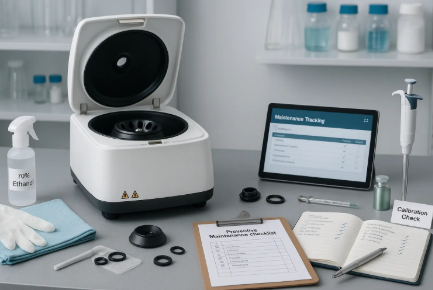
Establish a calibration schedule based on manufacturer recommendations and usage frequency. Calibrate scales, pipettes, spectrometers, and thermal devices with traceable standards; record results and corrective actions if tolerance limits are exceeded.
Clean surfaces and components after each use using approved cleaners—70% ethanol for nonporous surfaces, manufacturer-specified solvents for optics and sensors. For biological materials, use disinfectants compatible with the instrument and document contact time. Avoid abrasive wipes on sensitive surfaces.
Replace consumables (filters, seals, O-rings) at specified intervals and keep a spare parts list. Perform post-cleaning functional checks and include calibration verification after any maintenance that can affect measurement.
Storage Guidelines
Store instruments in climate-controlled areas within specified ranges; note device limits on temperature and humidity near the storage location. Keep sensitive optics and analyzers in dust-free cabinets or covered with breathable dust covers.
Organize consumables and accessories by compatibility and lot number. Use labeled, sealed containers for reagents and desiccants for moisture-sensitive items. Rotate stock using first-expire, first-out (FEFO) principles.
Secure heavy or tall equipment to benches or walls to prevent tipping. For long-term storage, follow manufacturer shutdown procedures, drain reactive fluids, and document the storage condition and expected recommission date.