Spring Starters Explained: How They Work and Who Needs Them

A spring starter is a mechanical device that stores energy in a compressed spring and releases it to crank an engine into operation. Unlike battery-dependent electric starters, this technology provides a self-contained starting solution that functions independently of electrical systems, making it an essential tool for demanding industrial applications around the world.
The Basic Principle Behind Spring Starting
Physics governs the spring starter’s operation. When you compress or wind a spring, you store potential energy within its coils. Upon release, that stored energy converts rapidly into kinetic energy—rotational motion that drives the engine’s flywheel. The principle is the same one that powers wind-up toys, mechanical watches, and countless other precision mechanisms, scaled up to handle the formidable demands of industrial diesel and gas engines.
The key engineering challenge is controlling the release of this energy. Release it too quickly and gear components suffer shock damage. Release it too slowly and insufficient torque reaches the flywheel. Quality spring starters use precision-machined release mechanisms that balance speed and control for optimal performance.
Types of Spring Starters Available
Manually Wound Units
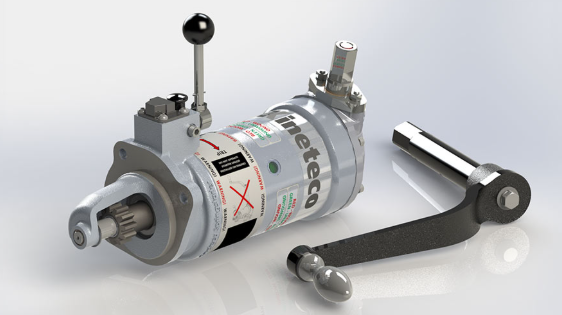
The most common configuration uses a hand crank or lever to wind the spring manually. The operator turns the crank until the spring reaches its designed tension, then triggers the release mechanism to crank the engine. These units are simple, reliable, and require no external power source whatsoever.
Hydraulically Assisted Winding
Larger spring starters sometimes incorporate hydraulic assistance for the winding process. This allows operators to compress heavier springs without excessive physical effort, making it practical to use spring starting technology on very large engines that would otherwise require impractically large manual effort.
Pre-charged Units
Some applications use spring starters that remain charged and ready for extended periods. Emergency standby systems, for instance, benefit from pre-charged units that can fire instantly without any preparation. These are particularly valuable in fire suppression and emergency power systems.
Comparing Spring Starters to Electric Starters
Electric starters have dominated most engine applications for decades, but they come with inherent vulnerabilities that spring starters avoid entirely:
- Battery dependency: electric starters fail when batteries drain, corrode, or lose capacity
- Cold weather performance: battery output drops significantly below freezing
- Charging infrastructure: remote locations may lack reliable charging
- Electrical system failure: any electrical fault can disable an electric starter
- Moisture sensitivity: electrical components are vulnerable to water ingress
Spring starters sidestep every one of these failure modes. They store energy mechanically, operate across extreme temperature ranges, require no external power, and function even when the entire electrical system has failed.
Sizing Your Spring Starter Correctly
Correct sizing is critical. An undersized spring starter will lack sufficient torque to crank the engine, while an oversized unit wastes money and takes up unnecessary space. Key sizing factors include engine displacement, compression ratio, required cranking speed, and environmental temperature range.
Manufacturers typically provide sizing charts that correlate these parameters with recommended spring starter models. When in doubt, consult the technical team—proper sizing ensures reliable starting and maximum spring life.
Installation Best Practices
Proper installation involves secure mounting to eliminate vibration-induced loosening, precise gear alignment to prevent premature wear, correct engagement depth to ensure full energy transfer, and protection from environmental exposure where possible. Following the manufacturer’s installation guide is essential for long-term reliability.
Real-World Performance in Challenging Environments
Field reports from oil and gas operations in Siberia, marine operations in the North Atlantic, and mining operations in high-altitude South American locations consistently highlight the spring starter’s ability to perform where electric systems fail. At temperatures that render batteries useless, the mechanical spring retains every joule of stored energy, ready to deliver on demand.
see also: SEO Agency Hong Kong: Advanced Strategies for Sustainable Online Growth
Frequently Asked Questions
Are spring starters safe to operate?
Yes. Quality spring starters include safety mechanisms that prevent accidental release and control the energy discharge. Operators should follow manufacturer guidelines for winding and release procedures.
How do I know when a spring starter needs servicing?
Signs that service is needed include difficulty winding to full tension, incomplete engagement with the ring gear, unusual sounds during operation, or reduced cranking effectiveness. Regular inspections prevent most issues.
Can one spring starter work on multiple engine types?
Some spring starters are designed for specific engine configurations, while others are adaptable to multiple applications. Consult the manufacturer’s compatibility specifications for your particular engine model.
Conclusion
The spring starter occupies a unique and valuable niche in the world of engine starting technology. Its mechanical simplicity, electrical independence, and exceptional environmental resilience make it the preferred choice for operators who cannot tolerate starting failures. Understanding how these devices work helps operators make informed decisions and get the most from this time-tested technology.